Bracts
They're arranged in a Fibonacci spiral, like sunflower seeds.
The large, colorful «petals» of a protea aren't actually petals at all. They're bracts, specialised leaves that evolved to protect the tiny true flowers hidden inside the bloom.
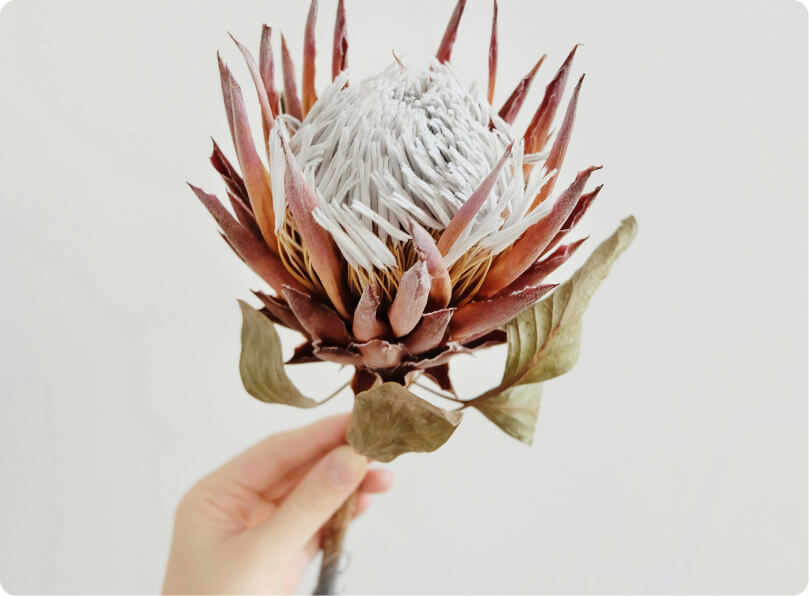
And here's the trick: these bracts follow a Fibonacci spiral, the same mathematical pattern you see in sunflower seed heads, pinecones, and galaxy arms.
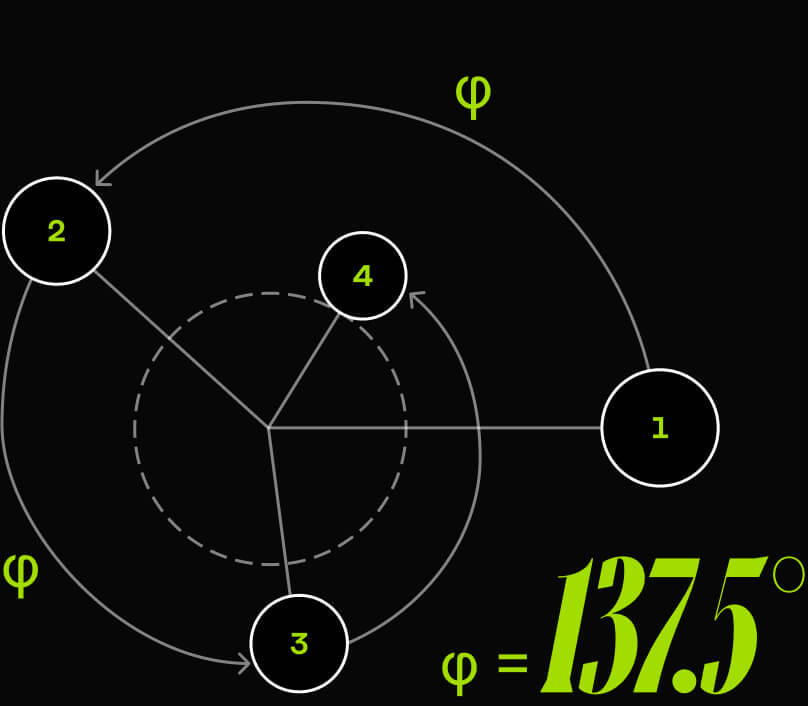
Each bract is offset from the previous one by roughly 137.5° — the so-called «golden angle» — which allows the flower to pack the maximum number of bracts into the tightest possible space while giving each one equal access to sunlight.
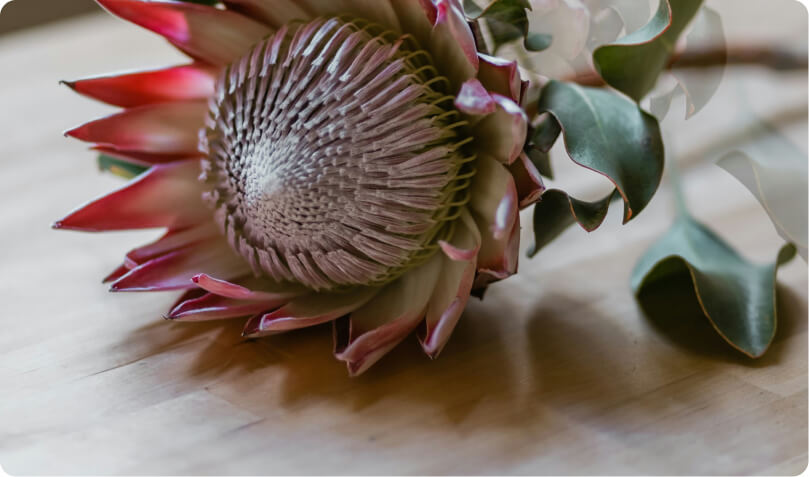
So when you look at a king protea from above, you're looking at the same geometry that governs the structure of hurricanes and the arms of the Milky Way.
How does protea hold its shape for 5 years dried?
What's the logic behind protea's color gradient?
What other «flowers» are actually leaves?